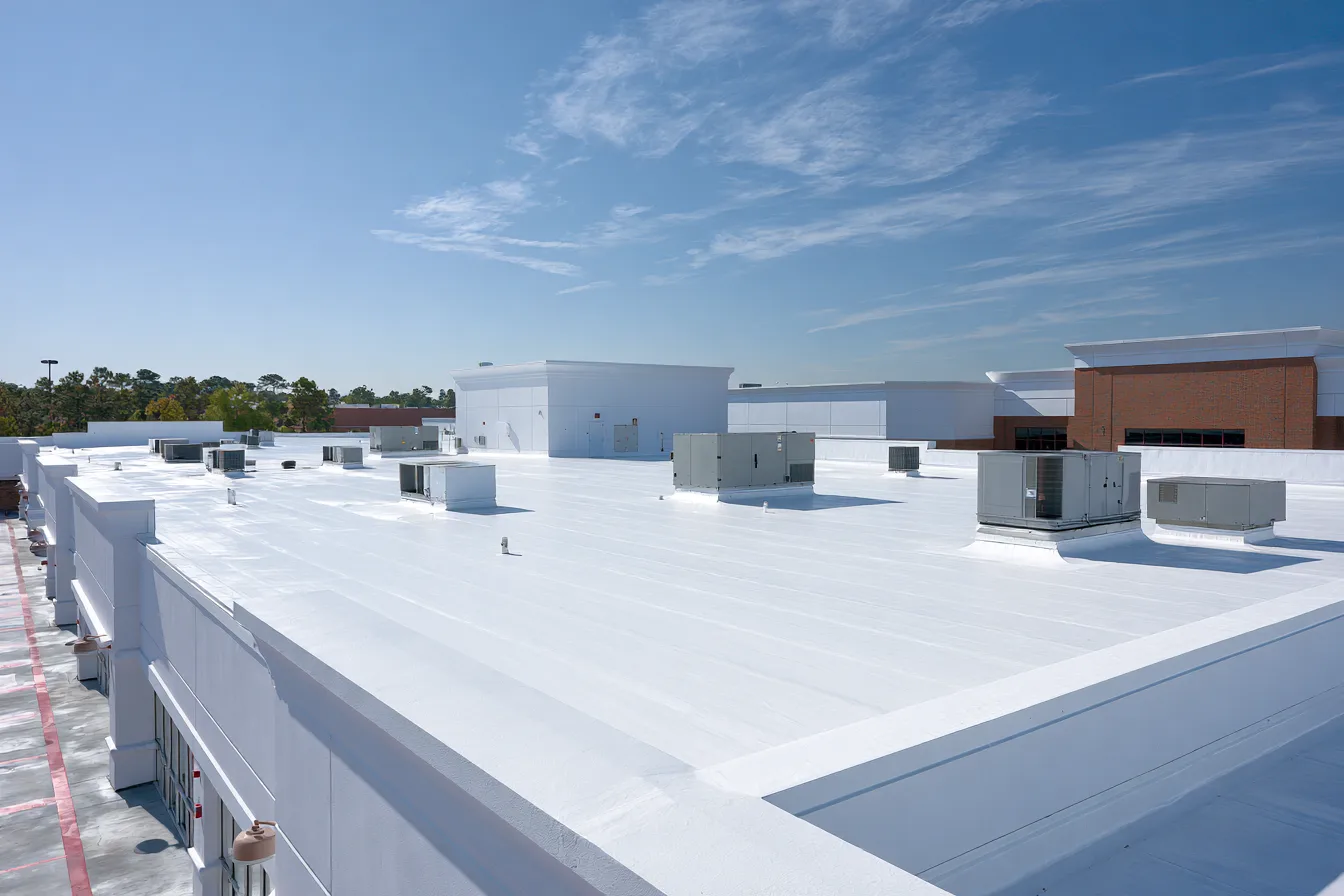
TPO Roofing
Welded sheet seams, curb details and attachment choices for a single-ply roof.
Explore this serviceProtect the building while planning the roof. Get help with commercial leak repair, TPO roofing, coatings and replacement decisions, with attention to tenants, equipment and access.
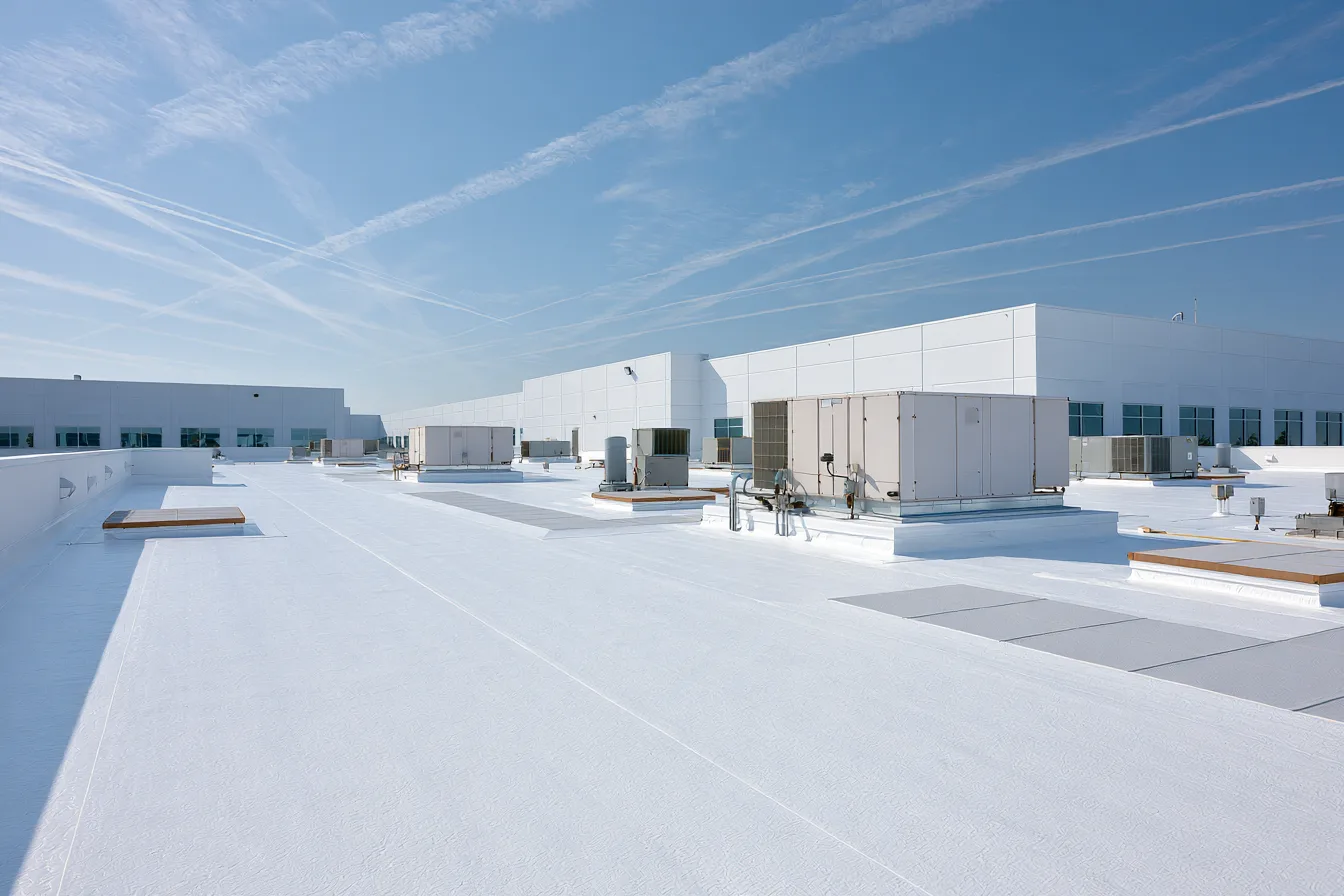
A commercial roof is an assembly, not just the surface you can see. Membrane, insulation, attachment, deck and drainage each affect whether a repair can hold, a coating is suitable or replacement is the sounder project.
A roof walk concentrates on seams, curbs, penetrations, perimeter flashings and drain paths, then connects those observations with leak history and the building below. Wet insulation or uncertain concealed conditions may call for further investigation before a scope is set.
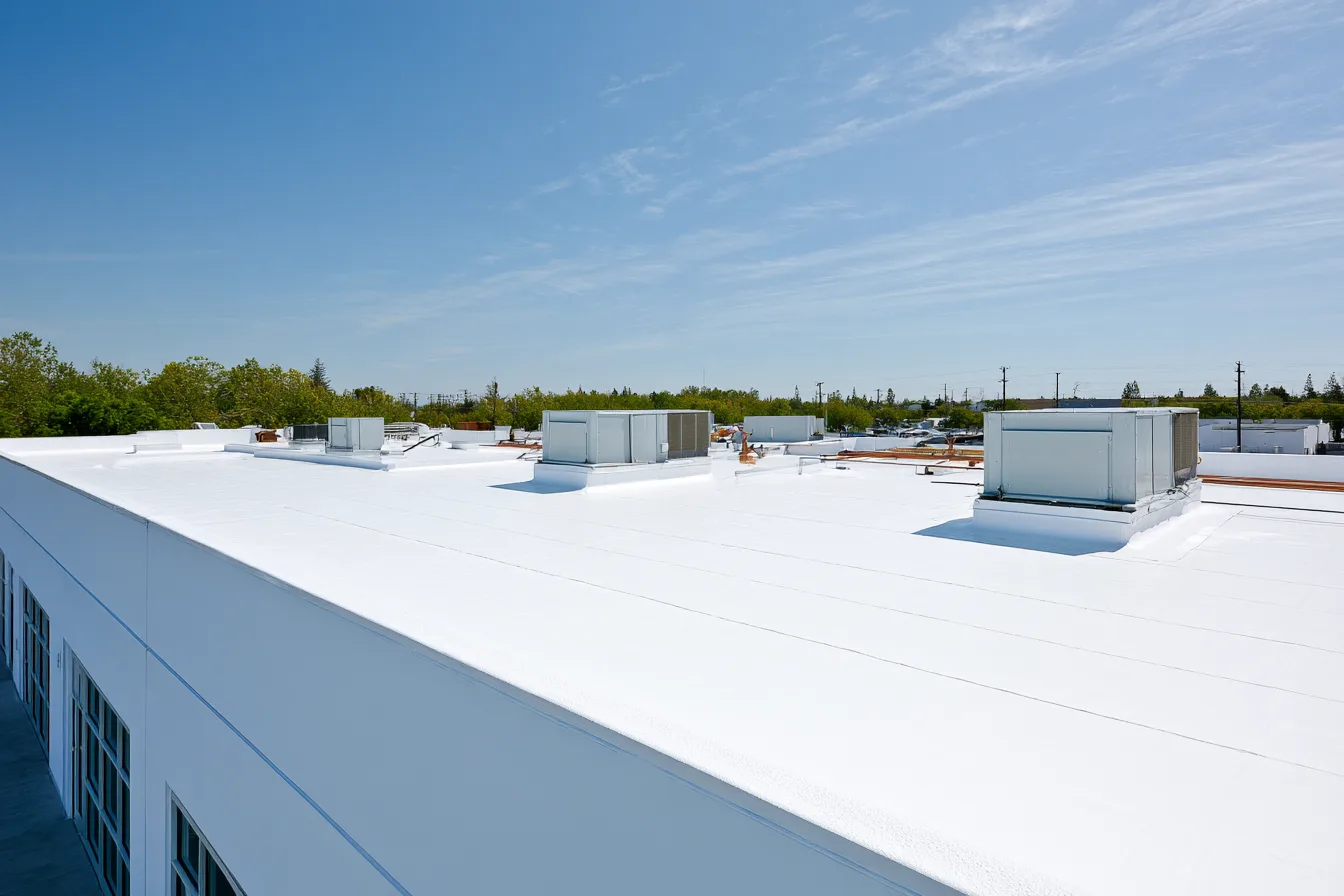
Choose the option that fits the roof’s condition and the building’s operating needs.
| Approach | Suitable starting condition | Work that may change the decision |
|---|---|---|
| Focused repair | A local puncture, seam or flashing defect surrounded by sound material. | Wet insulation, failed attachment or a wider drainage problem. |
| Restoration coating | A dry, stable, compatible existing roof that can be prepared for adhesion. | Unsound substrate, trapped moisture or detail failures needing repair first. |
| Replacement | Broad failure or layers that cannot support dependable repair/restoration. | Deck repairs, insulation, tapered drainage, equipment and staging. |
Welded sheet seams, curb details and attachment choices for a single-ply roof.
Explore this service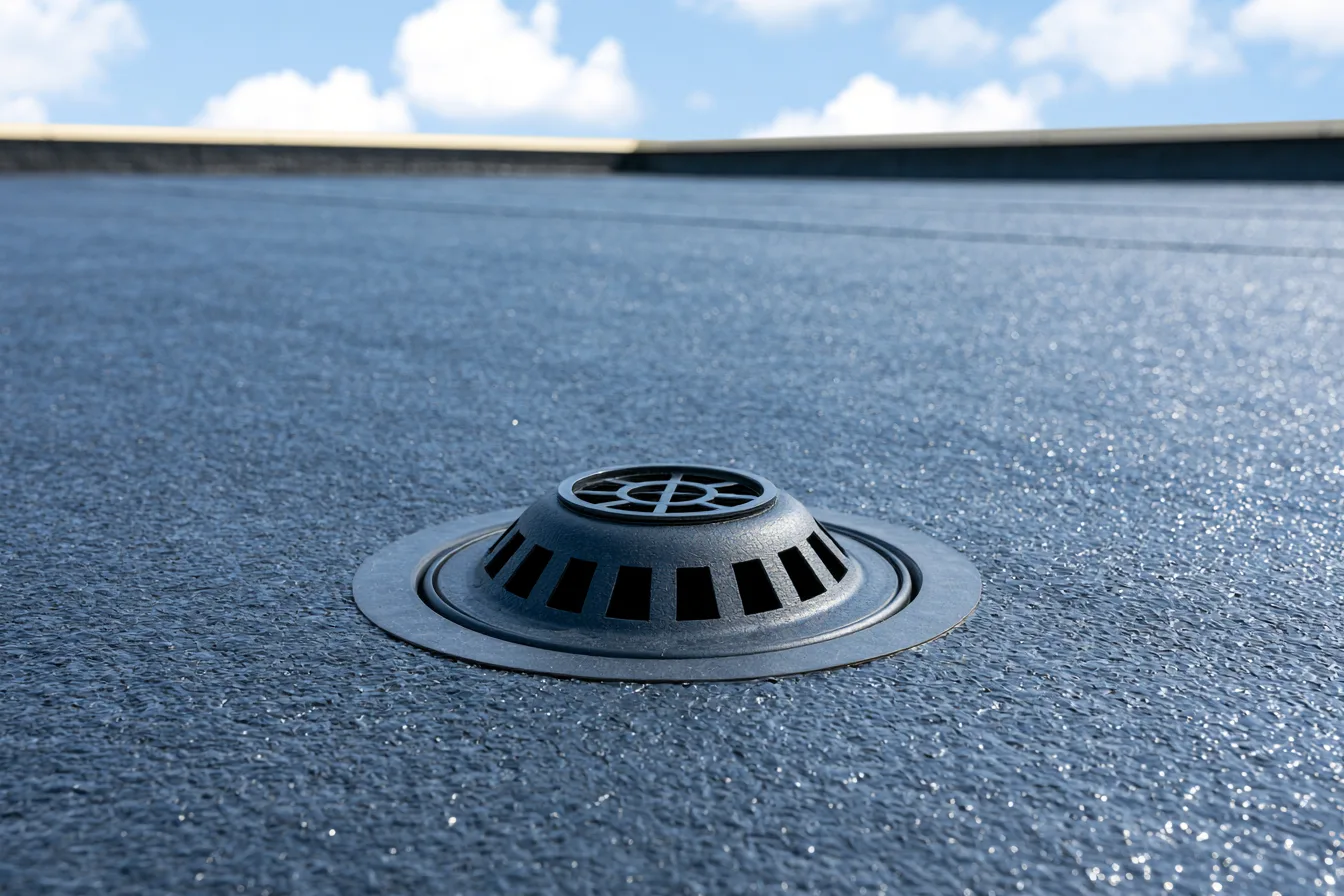
Leak tracing and compatible repairs at seams, drains and penetrations.
Explore this service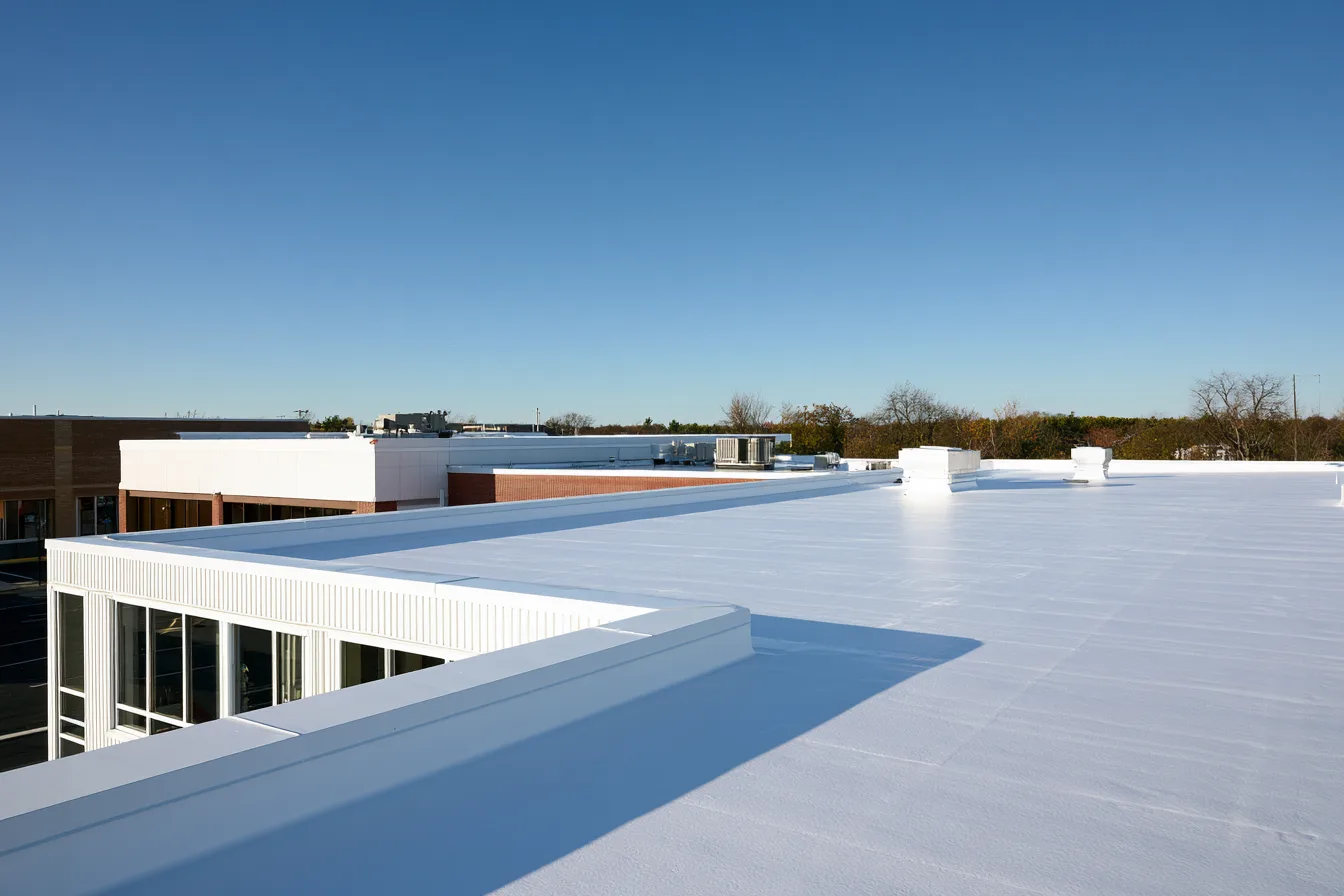
Restoration eligibility, preparation and the limits of a coating-only approach.
Explore this serviceThe work plan needs to fit how the property operates. Mention the parts of the building that cannot be interrupted.
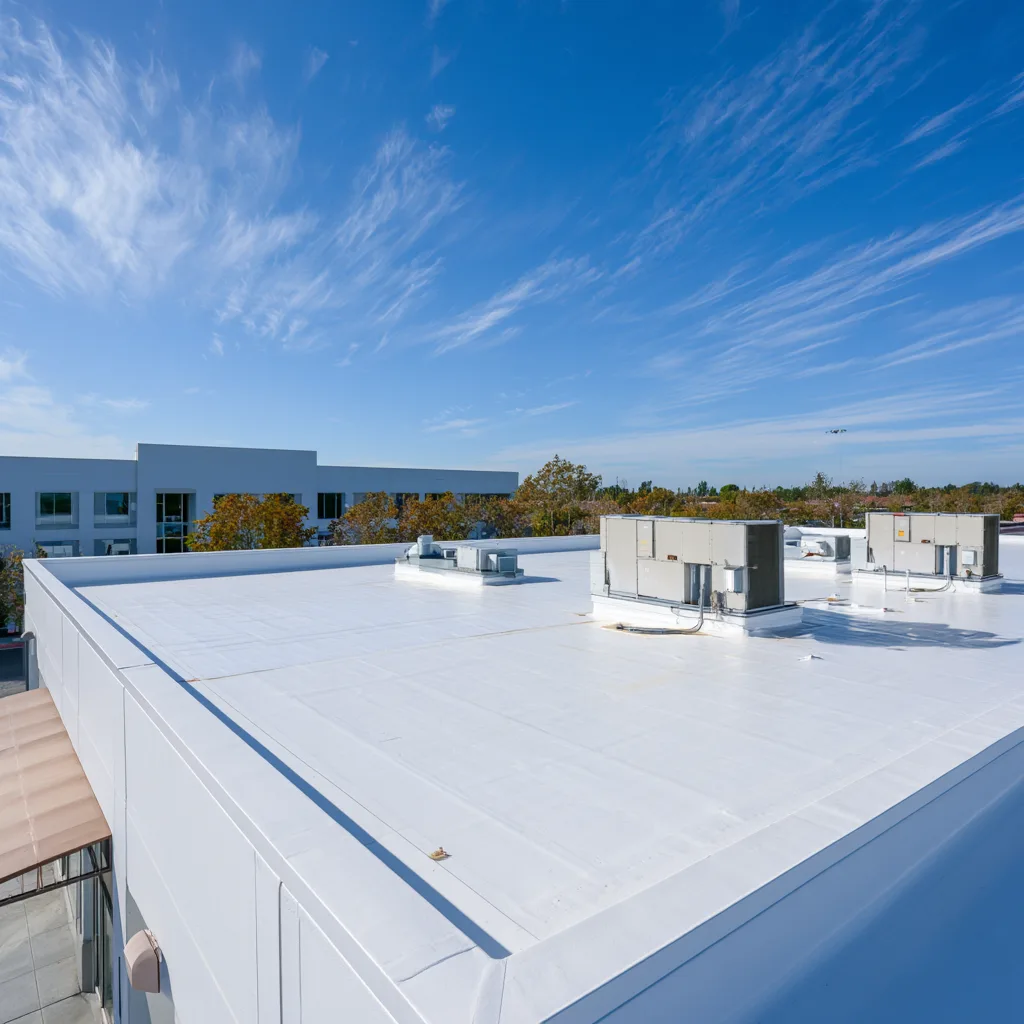
Material delivery and debris routes need to preserve a workable approach to tenant doors and loading areas. Roof height and equipment access influence lifting and staging.
Curbs and pipes need coordinated flashing. Disconnecting or relocating HVAC, electrical or plumbing equipment requires the appropriate trades. Interior use helps plan noise, odors and protection.
Drains, scuppers and overflow paths need attention alongside the roofing. Project phasing and temporary protection should account for the areas opened during the work.
Identify the covering, layers and attachment, inspect accessible details and determine whether moisture or deck investigation is needed.
Roof area drives material quantity. Curbs, penetrations, perimeter work, insulation condition, access and other trades can change labor and the project total.
Compare repair and capital options against the building’s needs. Agree on scope, contractor terms, access and project sequencing before work begins.
Often, work can be planned around continued use. The system, access, interior activities, safety and work scope determine what arrangements are practical. Discuss tenant entrances, deliveries and sensitive operations at the start.
No. A coating needs a compatible sound substrate and proper preparation. Wet insulation, failed decking or drainage defects require other work. See roof coating suitability before choosing restoration.
Equipment disconnection, relocation or trade repairs need the appropriate service trades. Roofing work addresses the flashing interface, with coordination where equipment affects that detail.
Describe the building, roof concern and any access or operating needs. Request a free roof walk to discuss the useful next step.